Talking video
Try d-id ai free with one short video idea
A d-id ai free search usually starts with a simple goal: make a still face speak. Prepare a photo and a brief script, then check the tool’s current access terms before starting your clip.
Prerequisites
A small amount of preparation makes the first run easier to assess.
-
1
Choose a suitable face photo
Use a clear, front-facing portrait that you own or have permission to use. Even lighting and an unobstructed face give a talking-photo tool a better starting point than a distant group shot.
-
2
Write a short spoken script
Start with two or three sentences you can read aloud comfortably. Spell out unusual names where helpful, and leave complex pronunciation tests for a later attempt.
-
3
Check access before uploading
Review the current tool screen for any sign-in requirement, generation allowance, output restrictions, and rules for uploaded images. Free access can change, so verify what is offered at the moment you use it.
One full run-through
Keep the first attempt small: one permitted portrait, one short greeting, and one review of the result.
What changes between input and output
The image pair illustrates the intended transformation, not a guaranteed result from a particular upload.
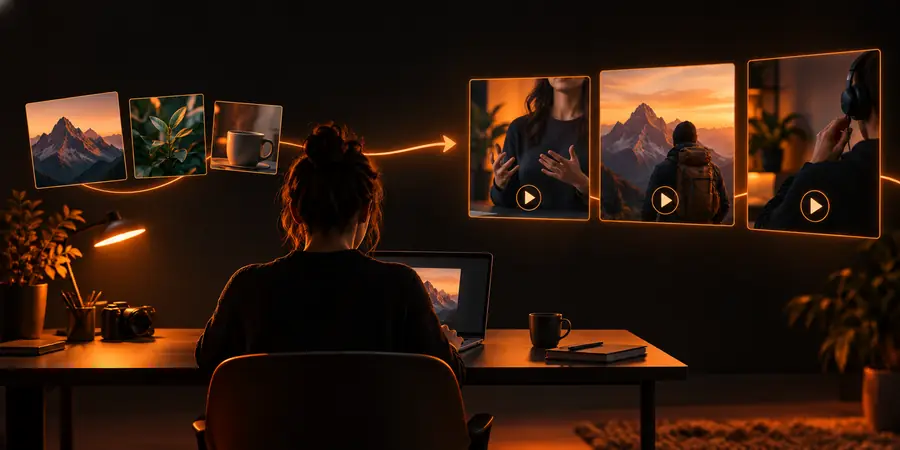
These are illustrative scenes, not a matched before-and-after test. Your result depends on the source image, script, voice, and options available when you create it.
Portrait and scriptSpeaking presenter clipOptions table
For a first test, compare a compact greeting with a longer, more demanding script.
| Short greeting | Long explanation | |
|---|---|---|
| Script | Two or three direct sentences | Several paragraphs with more opportunities for errors |
| Best purpose | Checking whether the portrait and voice work together | Evaluating pacing across a fuller message |
| Pronunciation review | A few words to inspect closely | More names and transitions to check |
| Revision effort | Change one line and compare the result | Identify which passage needs adjustment |
| Image choice | One clear, permitted portrait | The same portrait; extra script length will not fix a poor image |
| Access check | Confirm that a test clip is available | Check any current duration or generation restrictions first |
| Recommended order | Make this your first run | Try it after the short result looks acceptable |
What fails
A free starting point is useful for testing an idea, but it cannot guarantee a usable video from every input.
A poor portrait stays difficult
A tiny face, heavy shadows, or an object covering the mouth can make facial animation less convincing. Script changes alone will not repair missing visual detail.
What to do instead
Try a sharper, evenly lit portrait with the face looking toward the camera.
Speech may sound unnatural
Names, abbreviations, and dense sentences can produce awkward pronunciation or pacing. A convincing image does not guarantee a convincing voice.
What to do instead
Simplify the sentence, spell out abbreviations, and listen to a short test before extending it.
Access may have conditions
A free entry point does not mean every voice, duration, export option, or reuse right is available without restrictions. Current terms may also require an account.
What to do instead
Read the access and usage terms shown by the tool before uploading or publishing anything.
Permission cannot be generated
A tool cannot grant consent from the person in a photograph or establish your rights to an image. This matters especially when the clip could be mistaken for a real statement.
What to do instead
Use your own image or one with clear permission, and label synthetic presentations when appropriate.
Try a short clip
Begin with a permitted portrait and a brief message. Make one clip, review its voice and facial movement, then decide whether the result supports a longer video. Check the current access terms before you start.
Test the idea before extending the script
- Start with a clear portrait
- Keep the first script brief
- Review the result before revising
Its own FAQ
That depends on the access currently offered by the tool you choose. Check its live creation screen for any available free use, required account, and output restrictions before uploading a photo.
A clear portrait you have permission to use and a short script are sensible starting inputs. If the tool asks you to choose a voice, listen to a brief result before committing to a longer message.
Not necessarily. Review pronunciation, facial movement, image quality, consent, and the tool’s current usage terms before sharing a clip.
A low-resolution or obscured face can make animation harder, while a dense script can expose speech and timing issues. Try a clearer front-facing photo and one simple sentence to see which input needs attention.
No such allowance should be assumed from a search phrase. Check the current limits and permitted uses displayed by the service before planning multiple clips or a longer project.